One of the most common questions businesses ask before starting a new electronics project is:
“How much will embedded product development cost?”
The honest answer is that there is no fixed cost. The development effort depends on multiple factors, including hardware complexity, firmware requirements, testing needs, compliance requirements, and production readiness.
Whether you’re a startup building a new product, a manufacturer developing custom electronics, or an industrial automation company creating a specialized solution, understanding the major cost drivers can help you plan your project more effectively.
In this article, we’ll explore the key factors that influence embedded product development costs and explain why many companies prefer a Time & Material (T&M) engagement model.
Why Embedded Product Development Costs Vary
No two embedded products are identical.
A simple sensor monitoring device may require only basic hardware and firmware development, while an industrial controller with multiple communication interfaces, safety requirements, and cloud connectivity can involve significantly more engineering effort.
The overall development cost depends on:
- Product complexity
- Hardware architecture
- PCB design requirements
- Firmware functionality
- Testing and validation scope
- Compliance and certification needs
- Production support requirements
Understanding these factors helps businesses make realistic budget decisions.
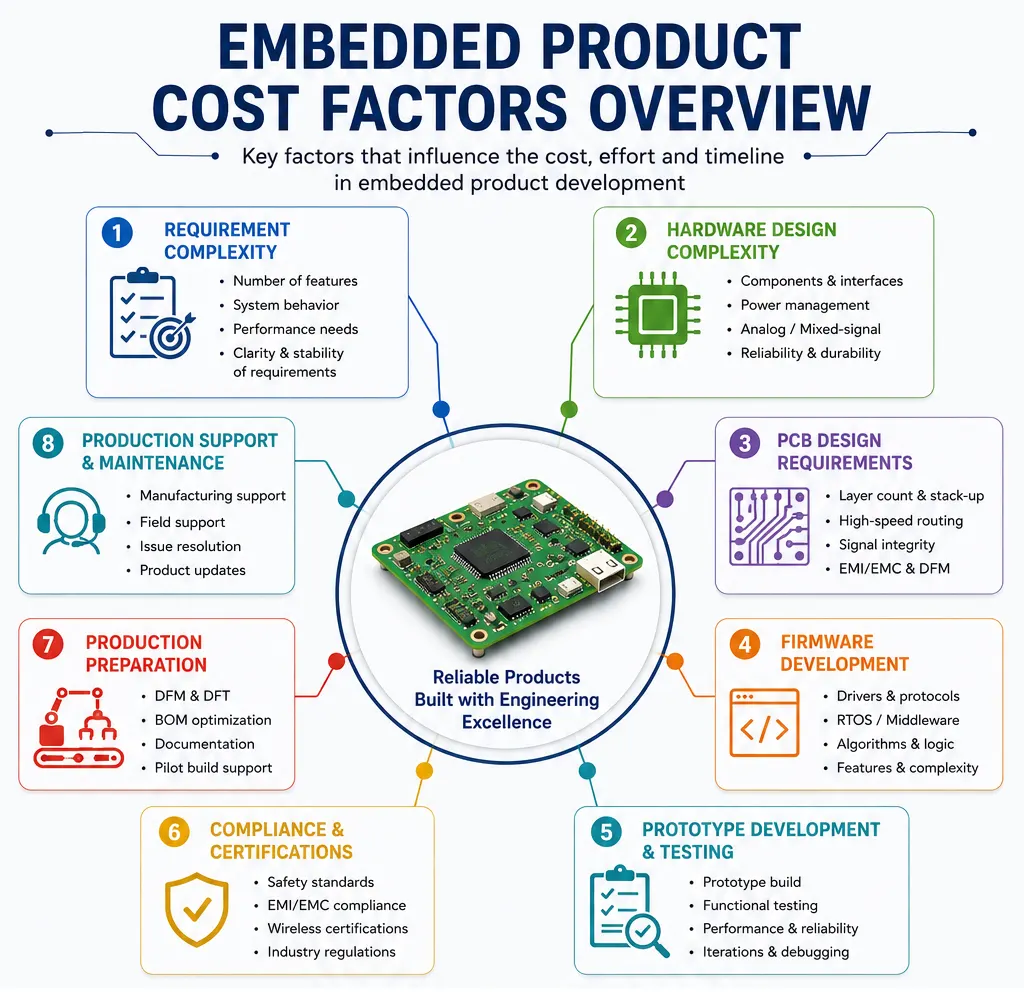
Requirement Complexity
Every project begins with understanding the product requirements.
The more detailed and complex the requirements, the more engineering effort is required during the design phase.
Factors that increase development effort include:
- Multiple operating modes
- Real-time performance requirements
- Safety-critical functionality
- Advanced user interfaces
- Wireless communication features
- Data logging and analytics
Clear requirements early in the project help reduce redesigns and avoid unnecessary development costs.
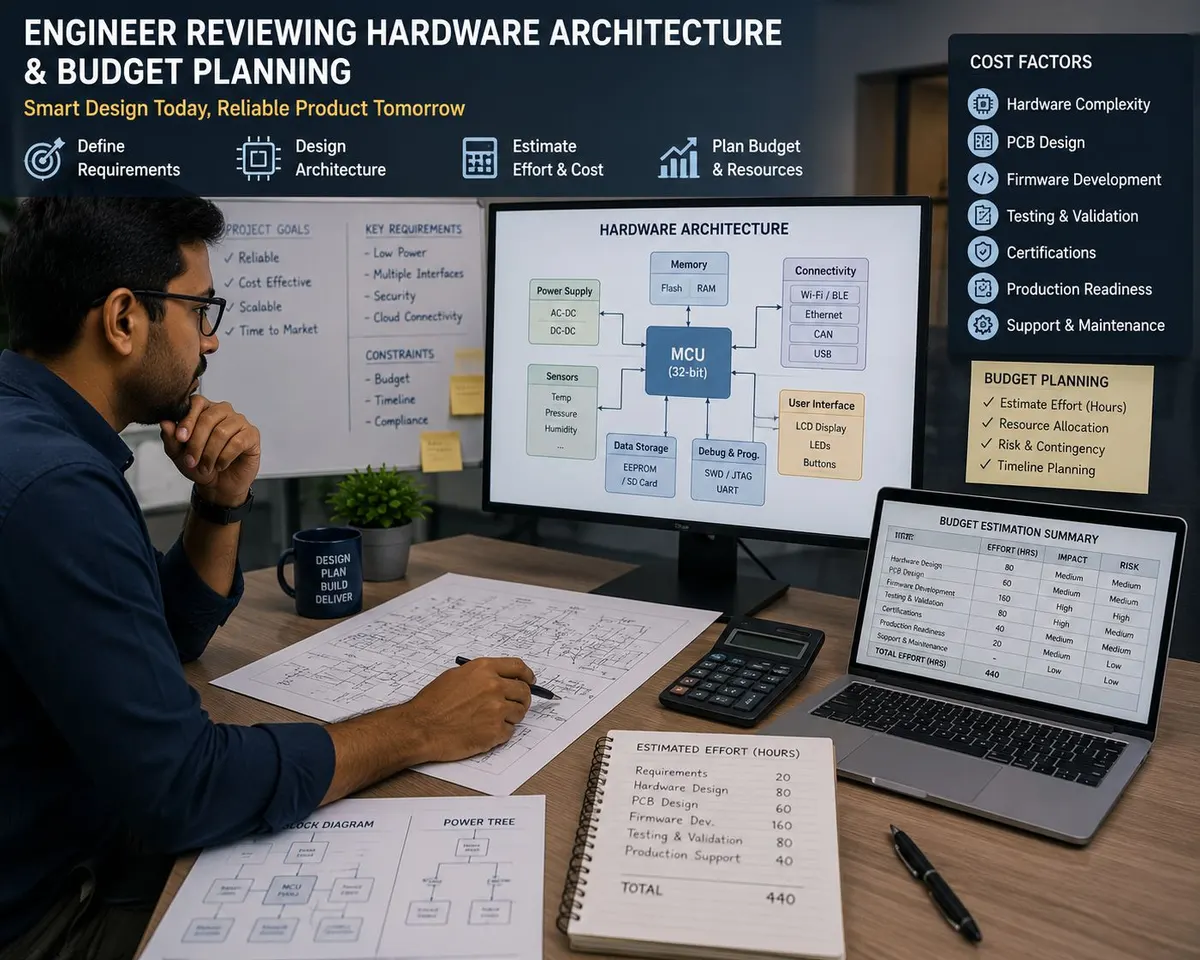
Hardware Design Complexity
Hardware development forms the foundation of every embedded product.
The complexity of the hardware architecture directly affects development effort.
Examples of factors that increase hardware complexity include:
- Multiple sensors and interfaces
- High-speed communication buses
- Power management requirements
- Mixed-signal designs
- Industrial-grade reliability requirements
- Custom power electronics
More complex hardware generally requires additional design reviews, simulations, and validation activities.
PCB Design Requirements
PCB design is much more than placing components and routing traces.
Modern products often require advanced PCB engineering considerations such as:
- Multi-layer PCB designs
- High-speed routing
- Controlled impedance
- Thermal management
- EMI/EMC considerations
- Design for Manufacturability (DFM)
Products with advanced PCB requirements typically require more engineering effort than simple single-board designs.
Firmware Development Effort
Firmware development is often one of the largest contributors to project effort.
The amount of firmware required depends on product functionality and system complexity.
Typical firmware activities include:
- Peripheral driver development
- Communication protocol implementation
- Real-time task management
- User interface control
- Data processing
- Diagnostics and fault handling
Products requiring multiple communication interfaces, cloud connectivity, or advanced control algorithms generally require additional development and testing effort.
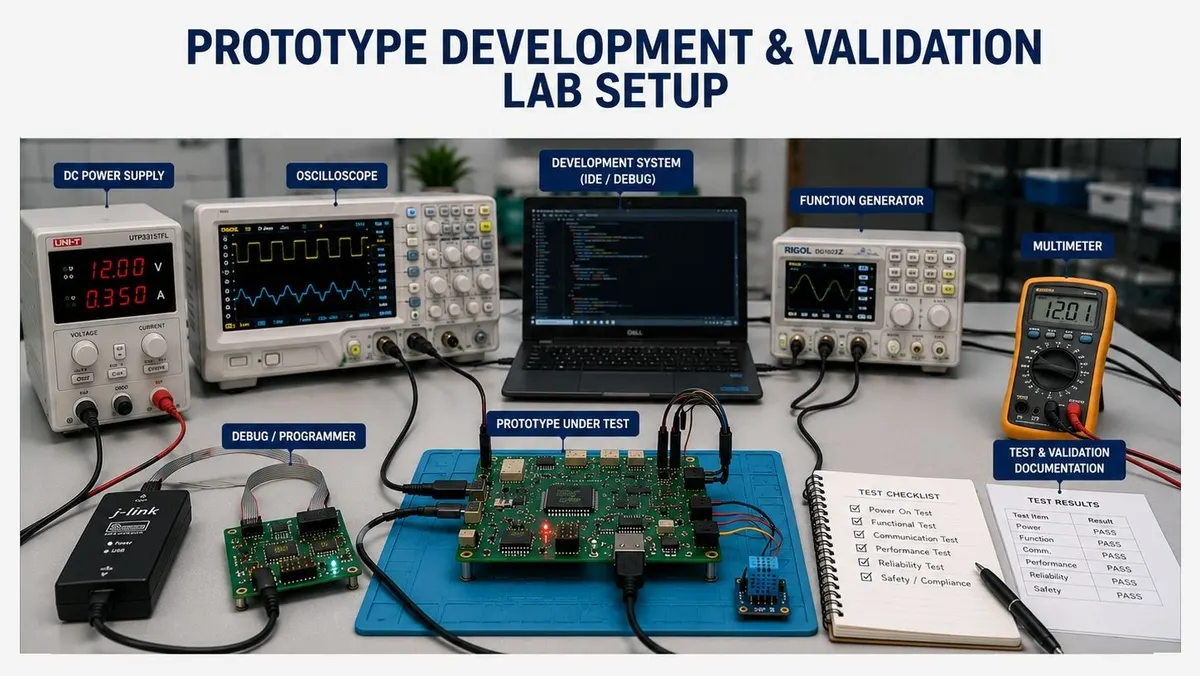
Prototype Development & Testing
Building a prototype is only the beginning.
A reliable product requires thorough validation and testing before production.
Typical activities include:
- Prototype assembly
- Hardware bring-up
- Firmware integration
- Functional testing
- Environmental testing
- Reliability testing
- Field validation
The more critical the application, the more extensive the testing process becomes.
Compliance & Certification Requirements
Certain products must meet industry-specific standards and certifications.
Examples include:
- EMI/EMC compliance
- Industrial standards
- Safety certifications
- Wireless certifications
- Environmental compliance requirements
Certification requirements can significantly influence development timelines and engineering effort.
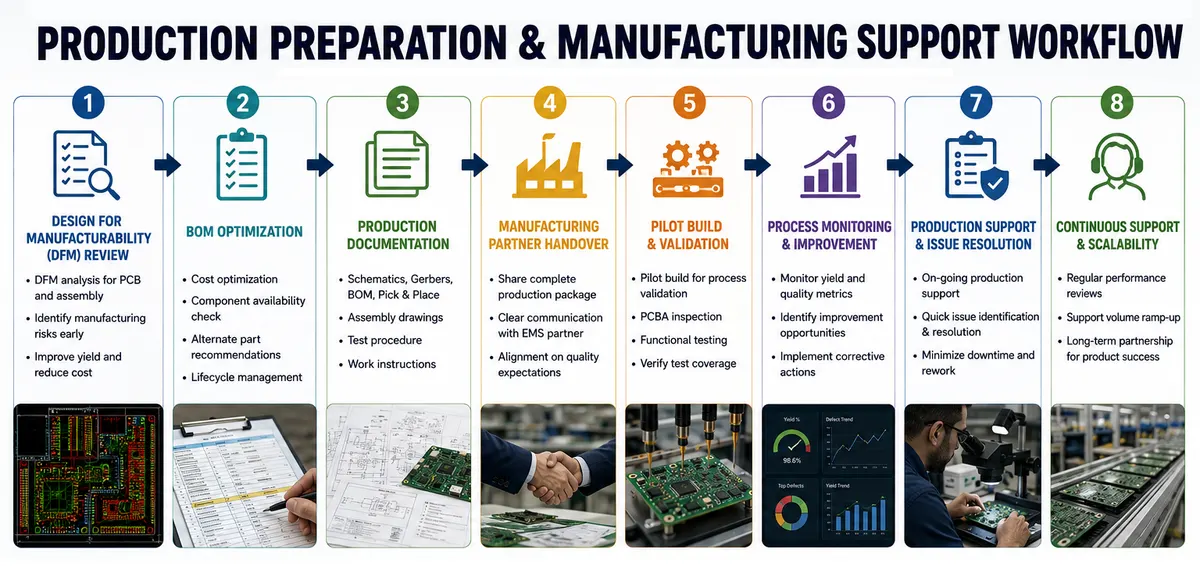
Production Preparation & Manufacturing Support
Preparing a product for manufacturing involves more than simply completing the design.
Additional activities may include:
- Design for Manufacturability (DFM)
- BOM optimization
- Production documentation
- Manufacturing coordination
- Pilot production support
These activities help reduce production risks and improve long-term product reliability.
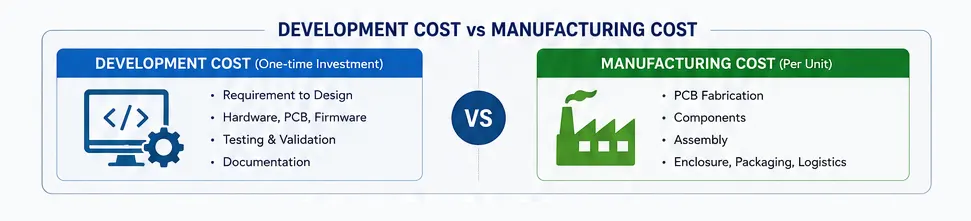
Development Cost vs Manufacturing Cost
Many businesses mistakenly combine development cost and manufacturing cost.
However, they are fundamentally different.
Development Cost
Development cost typically includes:
- Requirement analysis
- Hardware design
- PCB development
- Firmware engineering
- Testing and validation
- Documentation
This is generally a one-time engineering investment.
Manufacturing Cost
Manufacturing cost includes:
- PCB fabrication
- Component procurement
- PCB assembly
- Enclosures
- Packaging
- Logistics
These costs are incurred for every unit produced.
Understanding this distinction helps businesses plan budgets more accurately.
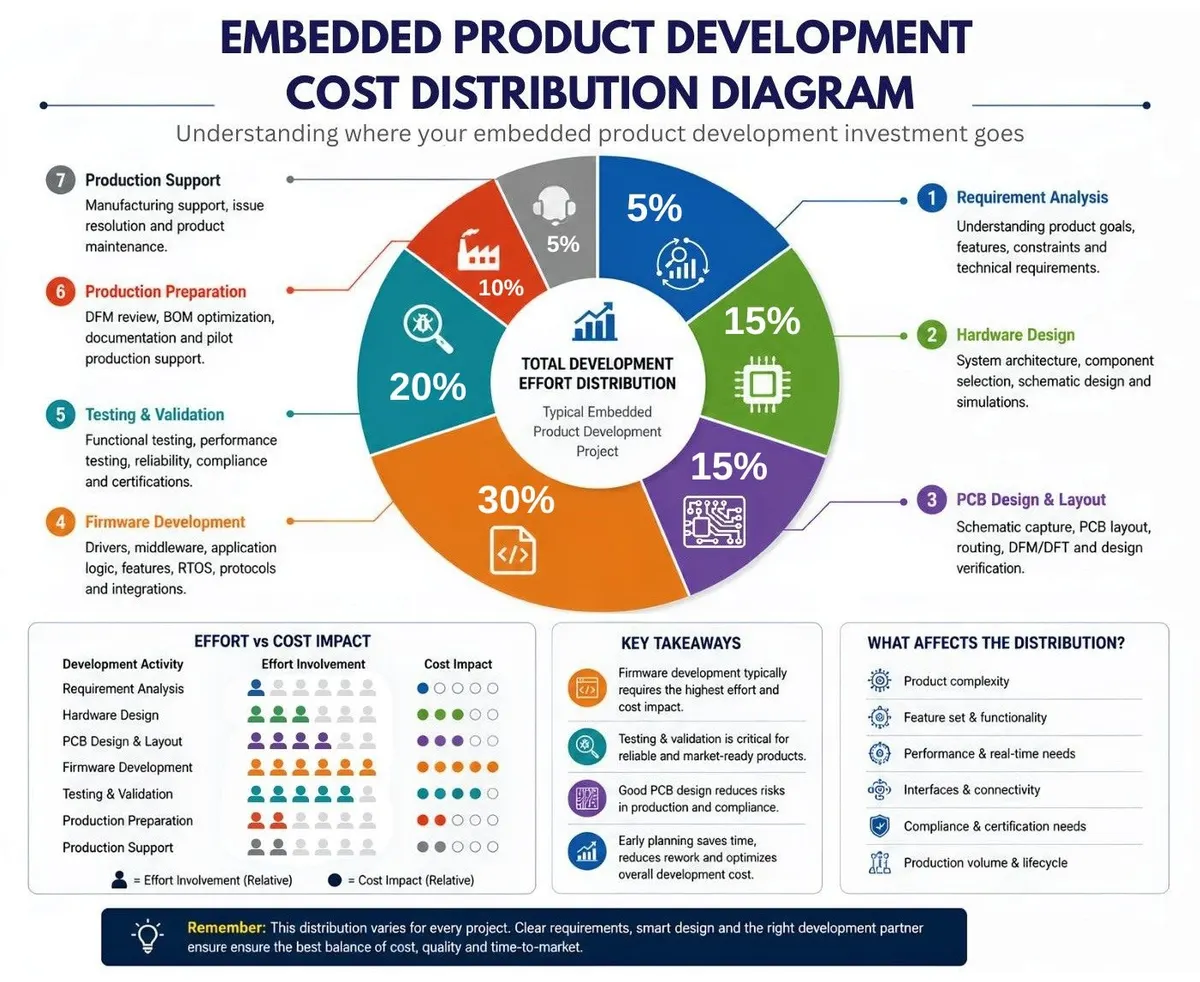
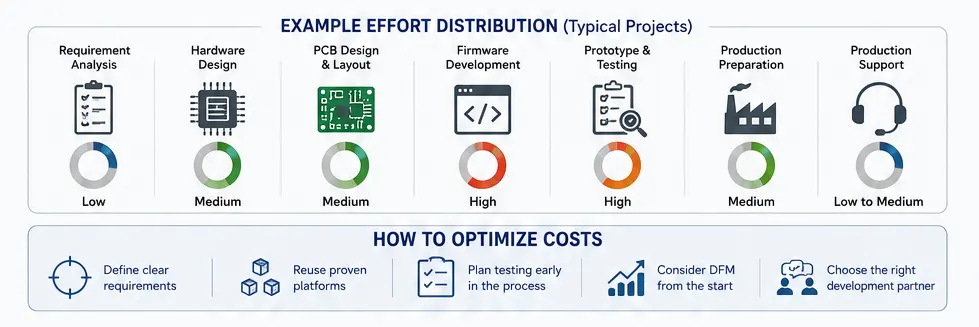
Example Cost Breakdown
The exact effort varies by project, but a typical embedded product may involve engineering effort distributed approximately as follows:
Development Activity
Typical Effort Impact
Requirement Analysis
Low to Medium
Hardware Design
Medium
PCB Design & Layout
Medium
Firmware Development
High
Prototype Development
Medium
Testing & Validation
High
Production Preparation
Medium
In many projects, firmware development and validation account for a significant portion of the total engineering effort.
Why We Prefer Time & Material (T&M) Projects
At BFES, projects are typically executed using a Time & Material (T&M) engagement model.
This approach offers several advantages:
- Greater transparency
- Flexibility for requirement changes
- Better engineering control
- Reduced project risk
- More realistic budgeting
At the beginning of the project, we provide a proposal that includes the estimated effort and expected project scope. These estimates help customers plan their budgets and timelines.
However, actual billing is based on the engineering hours utilized during development.
This ensures that customers pay for the work performed while allowing projects to evolve as requirements become clearer.
How to Reduce Embedded Product Development Costs
Businesses can reduce development costs by:
- Clearly defining requirements early
- Avoiding frequent scope changes
- Reusing proven hardware platforms
- Leveraging existing firmware modules
- Planning testing requirements in advance
- Considering manufacturability during design
Good planning often reduces overall project cost more effectively than cutting engineering effort.
Conclusion
Embedded product development costs depend on many factors, including hardware complexity, PCB requirements, firmware functionality, testing scope, certification needs, and manufacturing readiness.
Rather than focusing solely on initial cost estimates, businesses should focus on selecting a development partner capable of delivering a reliable, production-ready product.
A structured development process and realistic budgeting approach help reduce risk, improve product quality, and accelerate time-to-market.
Looking for Embedded Product Development Support?
We provide end-to-end embedded hardware design, PCB development, firmware engineering, testing, validation, and production support for startups, manufacturers, and industrial companies in Coimbatore, Chennai, across India, and international markets.
Frequently Asked Questions
Looking for Embedded Product Development Support?
We provide end-to-end embedded hardware design, PCB development, firmware engineering, testing, validation, and production support for startups, manufacturers, and industrial companies in Coimbatore, Chennai, across India, and international markets.
How much does embedded product development cost?
The cost depends on product complexity, hardware requirements, PCB design, firmware functionality, testing scope, and production support needs. Every project has unique engineering requirements, so costs can vary significantly.
Is firmware development usually the largest cost component?
In many embedded projects, firmware development and validation account for a significant portion of the engineering effort, especially when products require multiple communication interfaces, advanced control logic, or cloud connectivity.
Do you provide embedded product development services in Coimbatore and Chennai?
Yes. We work with startups, manufacturers, and industrial companies in Coimbatore and Chennai, providing hardware design, PCB development, firmware engineering, testing, and production support.
Do you work with companies across India and globally?
Yes. We support clients across India and international markets through structured remote collaboration, engineering documentation, and validation processes.
Do you provide production support after product development?
Yes. We assist with prototype validation, manufacturing coordination, DFM reviews, production support, and EMS-related activities to help customers transition smoothly into production.
Do you provide on-site support for testing and validation?
Yes. Based on project requirements, we can provide on-site support for product testing, validation, debugging, system integration, and deployment activities.
How do you charge for embedded product development projects?
Most projects are executed under a Time & Material (T&M) model. We initially provide a proposal with estimated effort and scope. Final billing is based on the actual engineering hours utilized during development.