What Does an Embedded Systems Company Actually Do?
When people hear the term “embedded systems company,” they often think of firmware programming or microcontroller development. In reality, an embedded systems company plays a much broader role in transforming product ideas into reliable, production-ready electronic systems.
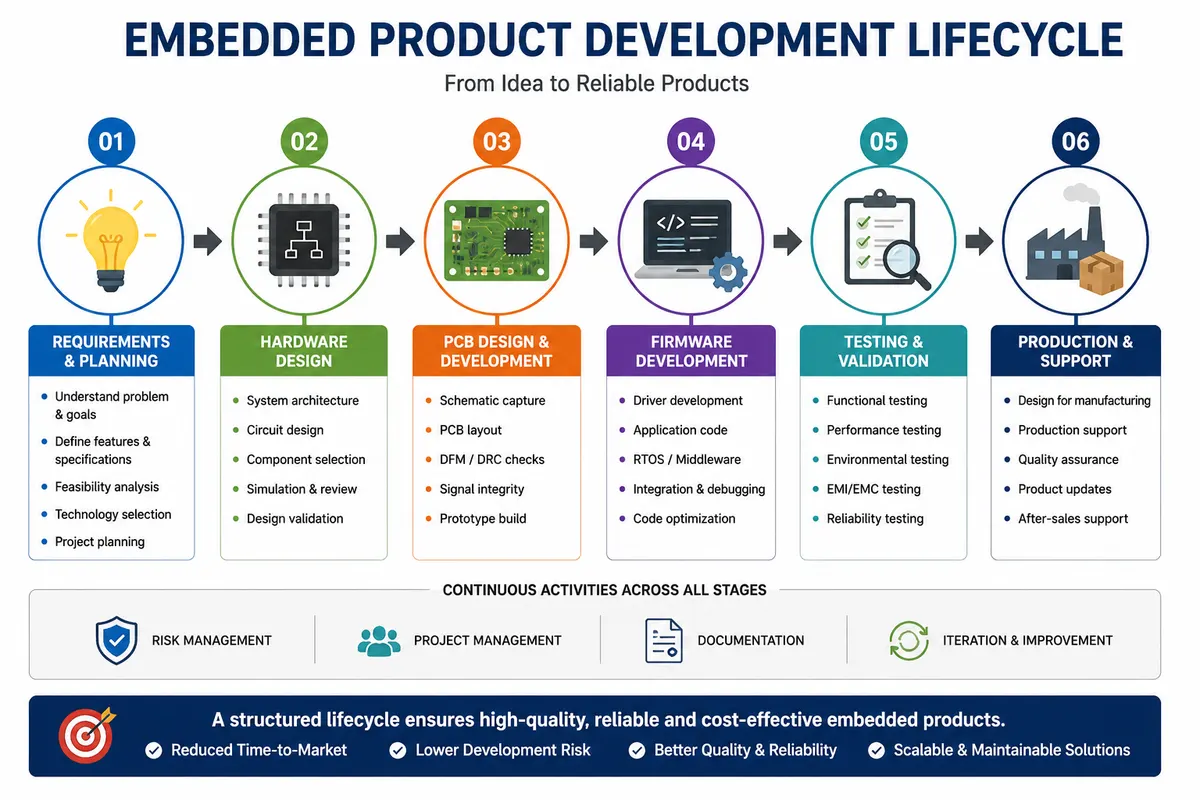
From hardware design and PCB development to firmware engineering, testing, and production support, embedded systems companies help businesses build products that interact with the physical world.
Whether you’re developing an industrial controller, IoT device, smart sensor, or custom electronic product, understanding what an embedded systems company actually does can help you choose the right development partner.
Understanding Embedded Systems
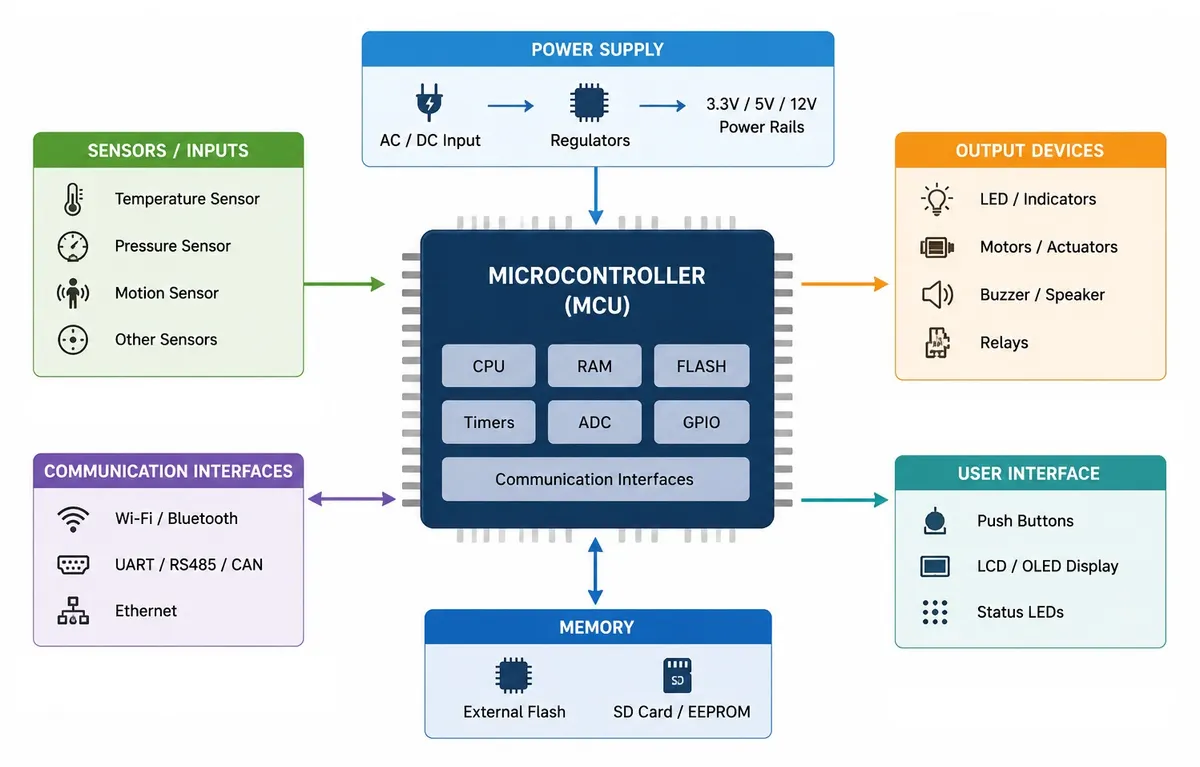
An embedded system is a specialized electronic system designed to perform a specific function within a larger product or machine.
Unlike general-purpose computers, embedded systems are optimized for dedicated tasks such as:
- Monitoring sensors
- Controlling motors and actuators
- Managing communication interfaces
- Processing data in real time
- Automating industrial equipment
Examples include:
- Industrial automation controllers
- IoT devices
- Smart energy meters
- Medical equipment
- Agricultural automation systems
- Automotive electronics
Developing these systems requires expertise across multiple engineering disciplines.
Hardware Design and Electronics Engineering
One of the primary responsibilities of an embedded systems company is designing the electronic hardware that forms the foundation of the product.
This typically includes:
- System architecture planning
- Component selection
- Microcontroller and processor selection
- Power supply design
- Sensor integration
- Communication interface design
A well-designed hardware platform ensures reliability, scalability, and long-term product performance.
PCB Design and Development
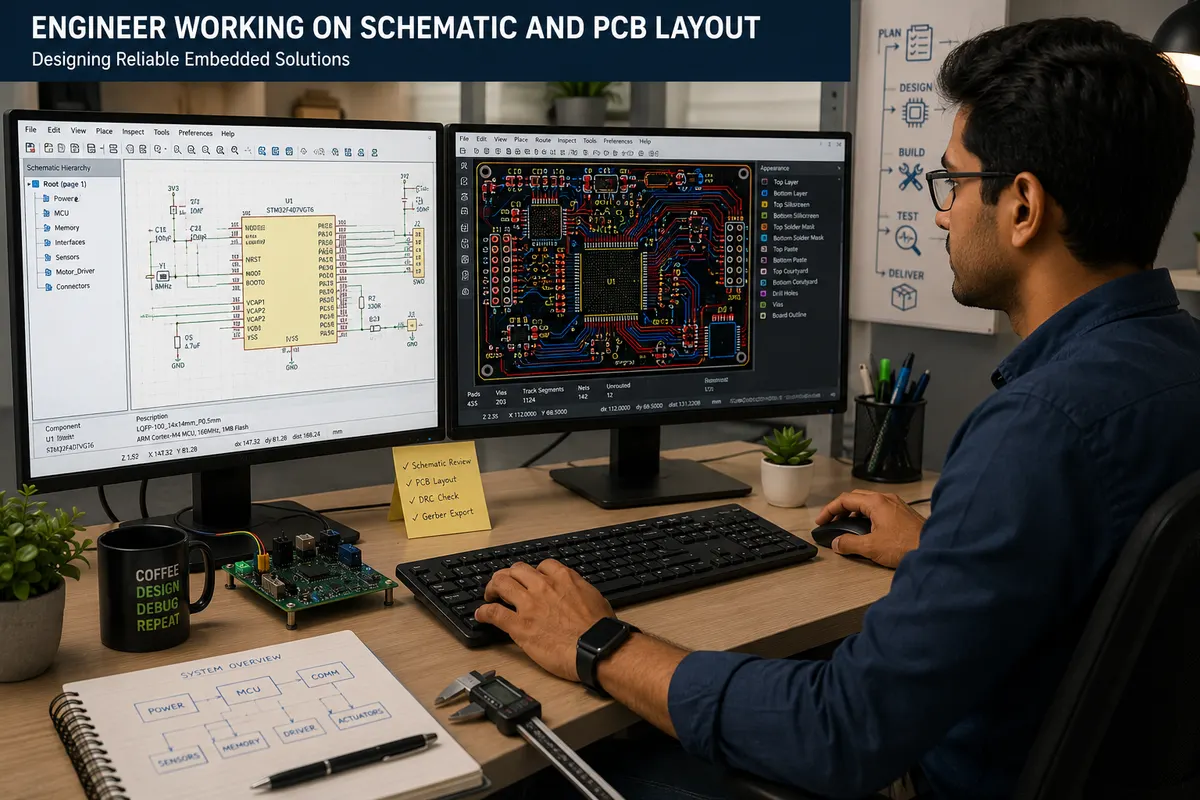
Once the hardware architecture is defined, engineers convert the design into a manufacturable Printed Circuit Board (PCB).
PCB development activities include:
- Schematic design
- PCB layout and routing
- Signal integrity planning
- Thermal management
- EMI/EMC considerations
- Design rule verification
PCB quality directly impacts product reliability, manufacturability, and certification success.
Firmware Development
Firmware is the software that runs directly on the embedded hardware.
It enables the system to communicate, process data, and perform its intended function.
Firmware development typically involves:
- Peripheral driver development
- Communication protocol implementation
- Real-time task management
- Memory optimization
- Error handling and diagnostics
Reliable firmware is critical for stable product operation.
Prototype Development and Bring-Up
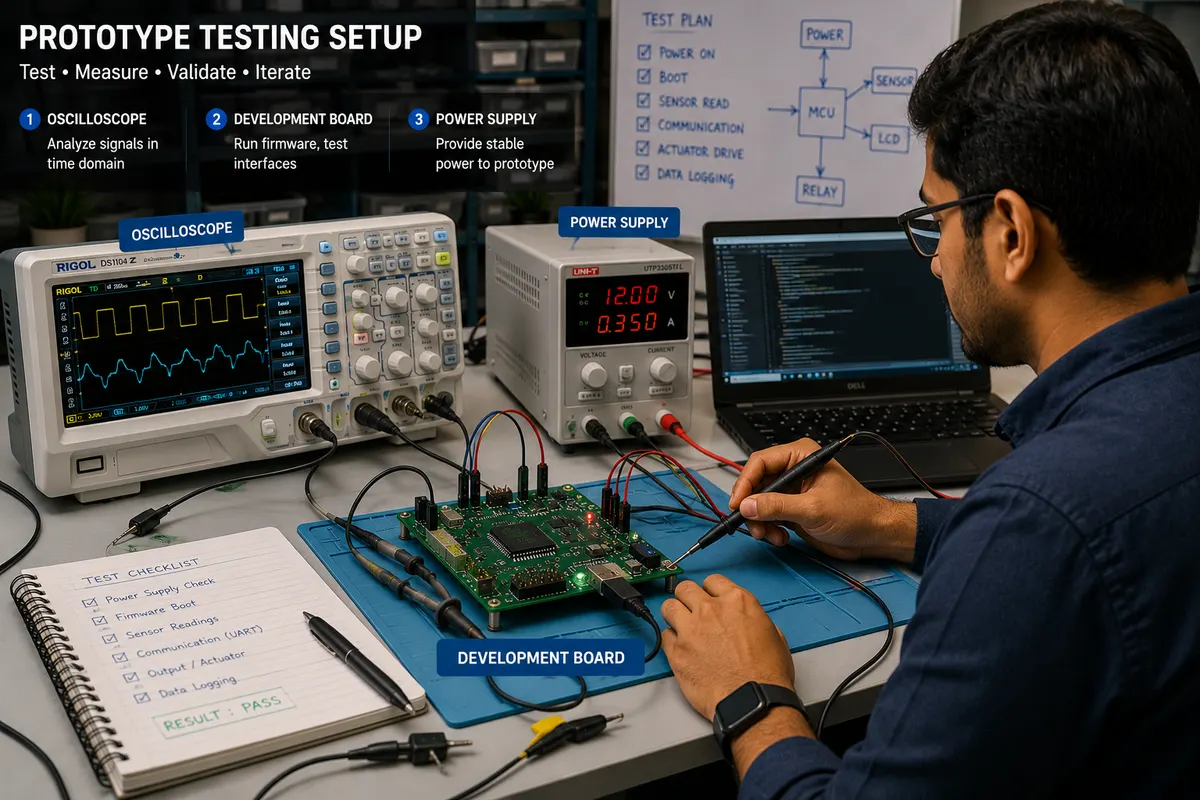
Before a product can move to production, prototypes must be built and validated.
An embedded systems company typically supports:
- Prototype assembly
- Hardware bring-up
- Firmware integration
- Initial testing
- Design verification
This stage helps identify design issues before large-scale manufacturing begins.
Testing and Validation
Testing is a crucial part of embedded product development.
Professional development teams perform:
- Functional testing
- Hardware validation
- Firmware verification
- Environmental testing
- Reliability testing
- Field validation
A structured testing process reduces the risk of failures after deployment.
Production Support and Manufacturing Readiness
The work does not stop once the prototype functions correctly.
Many embedded systems companies also support:
- Design for Manufacturability (DFM)
- BOM optimization
- Production documentation
- Manufacturing coordination
- Product revisions and updates
This helps ensure a smooth transition from development to production.
Industries That Use Embedded Systems
Embedded systems are used across a wide range of industries, including:
- Industrial Automation
- Manufacturing
- Agriculture Technology
- IoT and Smart Devices
- Automotive Electronics
- Energy Management
- Medical Devices
As products become more connected and intelligent, the demand for embedded systems expertise continues to grow.
How to Choose the Right Embedded Systems Company
When evaluating a development partner, consider:
- Hardware design expertise
- PCB development capability
- Firmware engineering experience
- Testing and validation processes
- Production support services
- Industry experience
The right partner should be able to support the complete product development lifecycle, not just individual engineering tasks.
Conclusion
An embedded systems company does far more than develop firmware or design circuit boards. It brings together hardware engineering, PCB design, firmware development, testing, and production support to transform ideas into reliable electronic products.
For businesses developing new products or modernizing existing systems, working with an experienced embedded systems company can significantly reduce development risk, improve product quality, and accelerate time-to-market.
Looking for Embedded Systems Development Support?
We provide end-to-end embedded hardware design, PCB development, firmware engineering, testing, and production support for industrial and product companies in Coimbatore, Chennai, across India, and international markets.
Frequently Asked Questions
1. What does an embedded systems company do?
An embedded systems company designs and develops electronic products that combine hardware, firmware, and software to perform specific functions. Services typically include hardware design, PCB development, firmware engineering, testing, validation, and production support.
2. What services does an embedded systems development company provide?
An embedded systems development company typically provides system architecture design, hardware development, PCB design and layout, firmware development, prototype creation, testing, validation, and production support. Some companies also assist with manufacturing coordination and product lifecycle management.
3. Do you provide embedded systems development services in Coimbatore and Chennai?
Yes. We work with startups, manufacturers, and industrial companies in Coimbatore and Chennai, providing end-to-end embedded systems development, including hardware design, PCB development, firmware engineering, and product validation.
4. Do you work with companies across India and globally?
Yes. We support clients across India and international markets through structured remote collaboration, engineering documentation, and validation processes for embedded product development projects.
5. Do you provide production support after product development?
Yes. We support customers beyond the design phase by assisting with prototype validation, manufacturing coordination, design for manufacturability (DFM), and production support through our EMS (Electronics Manufacturing Services) partner network.
6. Do you provide on-site support for testing and validation?
Yes. Depending on project requirements, we provide on-site support for product testing, system integration, validation, troubleshooting, and deployment activities.
7. How do you charge for embedded systems development projects?
Most projects are executed under a Time & Material (T&M) engagement model. We initially provide a proposal with estimated engineering effort, project scope, and expected timelines. Final billing is based on the actual engineering hours utilized during development.